
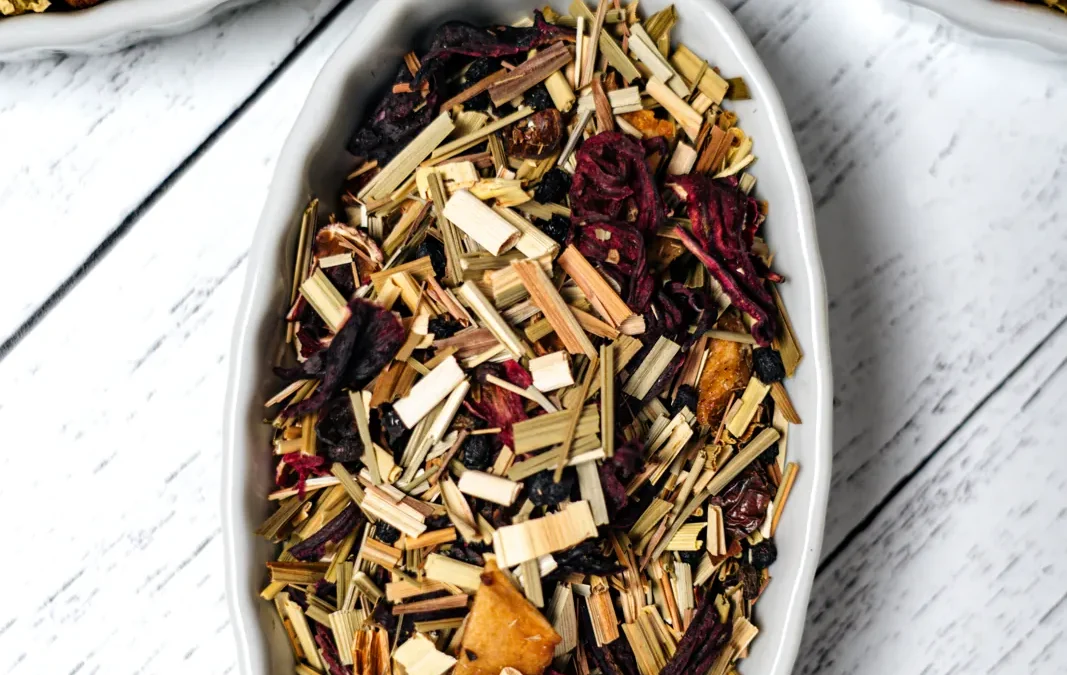
You sit down to work, open your laptop, and three tabs later you’ve forgotten what you came to do. If that sounds familiar, you’ve probably typed some version of “tea for focus” into a search bar, and one herb keeps showing up: ginkgo.
Ginkgo tea for focus is one of the most searched herbal ideas out there, and for good reason. The ginkgo tree is ancient, beautiful and full of history. But it also comes with a few things worth knowing before you brew. Here’s an honest, grounded look at ginkgo, what the research does and doesn’t say, and how to build a focus ritual that actually helps you settle into your work.
A quick note: ginkgo isn’t part of our blends. We’re writing about it because so many of you ask, and because we’d rather share clear information than hype.
Meet Ginkgo Biloba, the Living Fossil
Ginkgo biloba is one of the oldest tree species on Earth. Its family goes back more than 200 million years, to a time when dinosaurs walked under its branches. Scientists often call it a “living fossil” because it’s the only surviving member of its plant group.
You’d know it by its leaves: small green fans split down the middle into two lobes, which is where the name biloba (“two lobes”) comes from. In autumn the whole tree turns a buttery gold and drops its leaves almost all at once, carpeting the ground in yellow. That’s why it’s also called the maidenhair tree, after the fern its leaves resemble.
Ginkgo is native to China, where it has been planted around temples for centuries. It’s also famously tough. Several ginkgo trees near the center of the Hiroshima blast in 1945 survived and sprouted again the following spring, and some are still alive today. In Japan they’re honored as symbols of resilience and hope.
It’s easy to see why people are drawn to it. A tree that has outlasted so much feels like a fitting companion for a clearer, steadier mind.
Ginkgo and Focus: What the Research Says
Ginkgo leaf has a long history in traditional Chinese practice, and today ginkgo leaf extract is one of the best-selling herbal supplements in the world, often marketed for memory and concentration.
The research, though, is more modest than the marketing. According to the National Center for Complementary and Integrative Health (NCCIH), large studies haven’t shown that ginkgo improves memory or prevents memory decline. One of the biggest, the Ginkgo Evaluation of Memory Study, followed more than 3,000 older adults for several years and found no meaningful difference compared with a placebo.
It’s also worth knowing that most studies used standardized, concentrated leaf extracts, not a cup of tea. A mug of ginkgo leaf tea is a much gentler, less predictable thing.
So where does that leave your afternoon cup? We think it’s best to see ginkgo tea as part of a ritual, a pleasant, earthy herb to sip while you settle in, rather than a shortcut to a sharper brain. And that’s okay. Often, the ritual itself is what helps you focus.
What Does Ginkgo Tea Taste Like?
Ginkgo leaf tea is mild, green and slightly grassy, with a faint bitter edge, a little like a light green tea without the caffeine. It pairs nicely with something bright and citrusy like lemongrass or lemon peel, or with a touch of honey.
How to Brew Ginkgo Tea Safely
If you’d like to try ginkgo tea, a few simple guidelines matter:
- Buy dried leaf from a trusted tea or herb supplier. Skip leaves picked from a street or park tree. Raw leaves contain natural compounds (ginkgolic acids) that can irritate, and commercial products are typically processed to reduce them.
- Never eat or brew the seeds. Ginkgo seeds, raw or roasted, can be toxic. Leaf only.
- Measure gently. Use about 1 teaspoon of dried leaf per 8 oz (240 ml) cup.
- Use hot, not boiling, water. Around 180–195°F (82–90°C) keeps the flavor soft.
- Steep 3–5 minutes, then strain. Longer steeping makes it more bitter.
- Keep it to a cup a day, and stop if you notice headaches or an upset stomach.
Important Cautions Before You Try Ginkgo
Ginkgo is one herb where safety really matters. Please talk to your healthcare provider before trying it, especially if any of these apply to you:
- Blood thinners or bleeding risk: Ginkgo may increase the risk of bleeding, particularly with anticoagulants or antiplatelet medicines (like warfarin or daily aspirin) and some pain relievers.
- Upcoming surgery or dental work: Stop ginkgo ahead of time and tell your care team.
- Seizure disorders: Ginkgo may not be appropriate.
- Pregnancy or nursing: Not recommended.
- Other medications: Ginkgo can interact with a number of medicines, including some antidepressants and diabetes medications.
MedlinePlus has a fuller list of interactions.
A Gentle Alternative: Our Mindful Tea
If ginkgo isn’t right for you, or you’d simply like a ready-to-brew blend for your focus hours, this is the cup we reach for: our Mindful Tea.
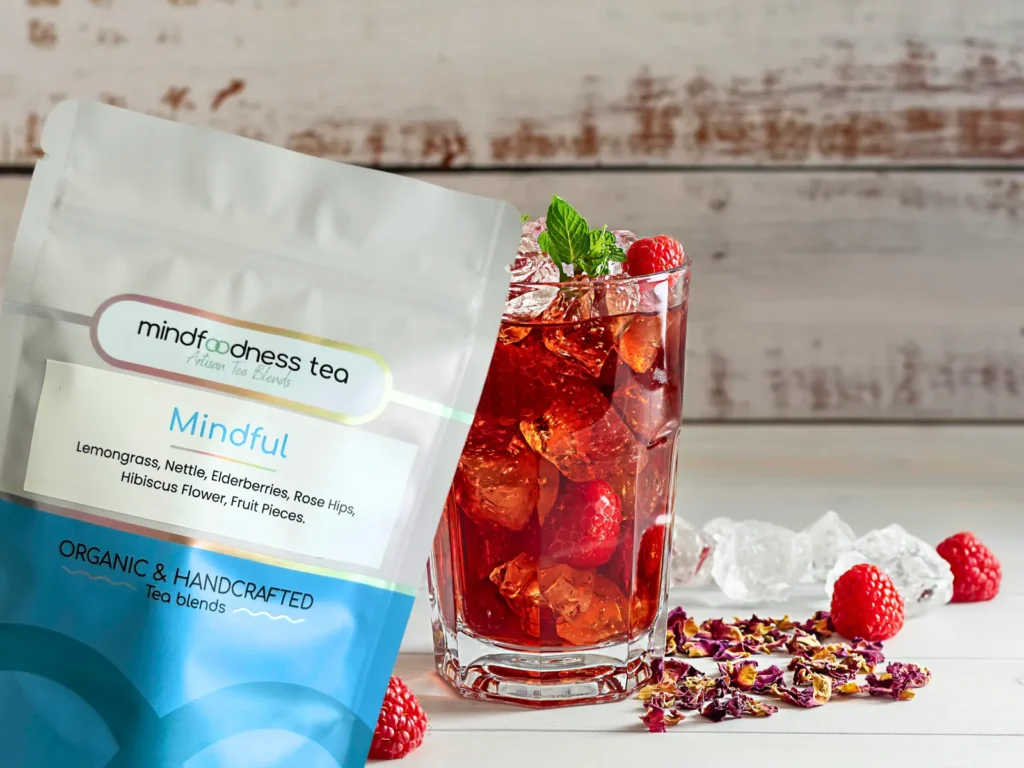
It’s a bright, citrusy loose leaf blend of organic lemongrass, nettle, hibiscus flower, rose hips and elderberries, with dried fruit pieces. Lemongrass gives it a crisp, clean aroma that many people find refreshing while they work. Hibiscus and rose hips add a tart, ruby-red brightness, and nettle brings a soft green note, the same grassy, grounded quality people enjoy in ginkgo.
Why it works for deep work:
- Caffeine-free. No jitters, no 3 p.m. crash, no trouble sleeping later.
- Bright aroma. That first citrusy breath helps signal “now we begin.”
- Easy to repeat. Brew it every time you start a focus session and the cup becomes a cue for your mind.
Like all our blends, Mindful Tea is organic, handcrafted in small batches and made with nothing artificial. You can browse every blend in our shop.
Note: Mindful Tea contains hibiscus. If you take blood pressure medication or are pregnant, check with your healthcare provider first.
A 45-Minute Focus Ritual With Tea
Whatever’s in your cup, ginkgo, Mindful Tea or another herbal blend, the ritual is what turns tea into focus.
- Clear one surface. Close the extra tabs, put your phone in another room, and write down the one task you’ll work on.
- Brew with attention. Measure your tea, pour the water, and watch the color bloom. Use the steeping minutes to take three slow breaths and picture the task done.
- Start a timer. Set it for 25 to 45 minutes. This is your focus block.
- Sip as you work. Let the warm cup be your anchor. When your mind drifts, take a sip and return to the task.
- Rest when the cup is empty. Stand up, stretch, refill your water, look at something far away. Then decide: another block, or done for now.
For more ideas, read our guide to herbal tea for focus, or try a short tea meditation before you begin.
Frequently Asked Questions
Does ginkgo tea help you focus?
Ginkgo has a long traditional history and is widely used as a supplement, but large studies haven’t shown that it improves memory or concentration in healthy adults. Many people still enjoy ginkgo tea as part of a calm work ritual, and that ritual, with one task, one cup and fewer distractions, can make a real difference.
Does ginkgo tea have caffeine?
No. Ginkgo leaf is naturally caffeine-free, as are all our herbal blends, including Mindful Tea.
Is it safe to drink ginkgo tea every day?
For many healthy adults, an occasional cup of ginkgo leaf tea from a trusted source is considered fine, but ginkgo interacts with several medications, especially blood thinners. Talk to your healthcare provider before making it a daily habit, and never use the seeds.
What is the best caffeine-free tea for focus?
The best tea for focus is one you enjoy enough to make a ritual. Many people like bright, aromatic herbs such as lemongrass, peppermint or lemon balm while they work. Our Mindful Tea, with lemongrass, nettle and hibiscus, is made for exactly that.
The ginkgo tree has spent 200 million years quietly standing its ground. Maybe that’s the real lesson for our scattered days: slow down, root in, take one thing at a time. Put the kettle on and begin.
This article is for general wellness information and isn’t medical advice.