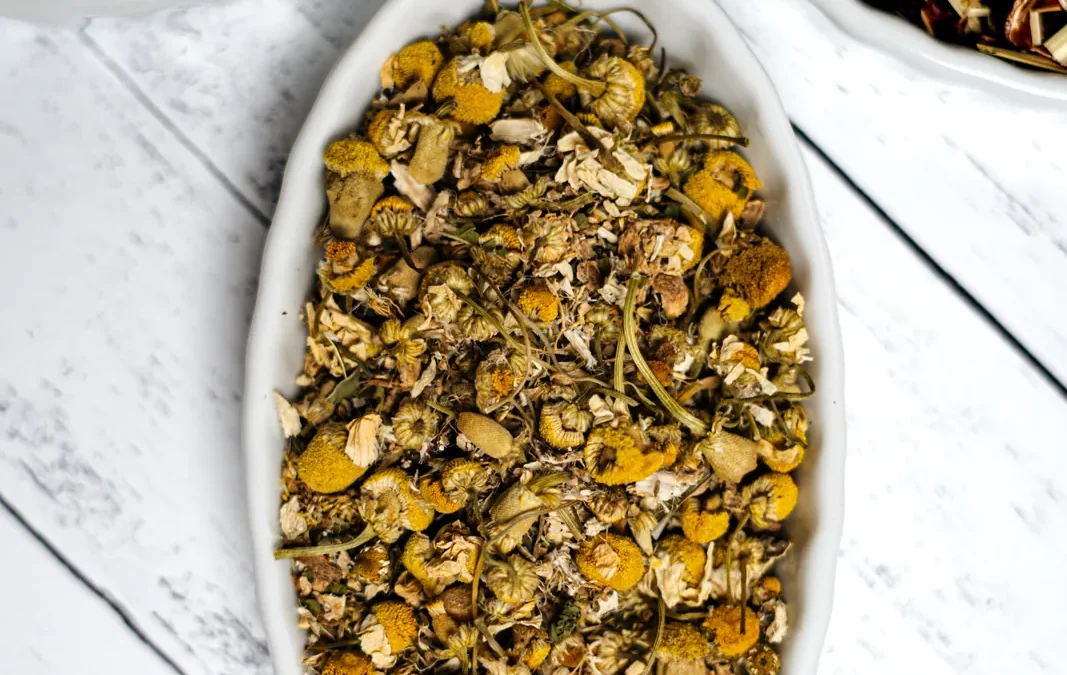
There’s a quiet kind of magic in a bowl of dried herbs. The papery rustle of rose petals, the green snap of peppermint, the sweet, sunny smell of chamomile. Run your fingers through them and you’re already halfway to a ritual.
Learning how to blend herbal tea is one of the most rewarding ways to deepen your tea practice. You don’t need special training or fancy tools. You need a few good herbs, a little curiosity, and a simple framework to keep your cup balanced instead of muddy.
This is the same way we think about every blend we make at Mindfoodness Tea. Here’s how to start your own.
Why Blend Your Own Herbal Tea?
A single herb can be lovely on its own. But herbs, like people, often shine brighter together. A blend lets you:
- Balance flavors. A bright herb lifts an earthy one; a sweet herb softens a bitter edge.
- Create a mood. Floral and soft for evenings, crisp and citrusy for focus, warm and spicy for cozy afternoons.
- Make it yours. Your blend can taste exactly the way you like it, and it becomes a small creative ritual in itself.
The Simple Formula: Base, Support, Accent
Most balanced blends follow a loose three-part structure. Think of it like building a song: a steady rhythm, a melody on top, and a few notes that make it memorable.
1. The base (about 50–70% of the blend)
The base is the backbone of your cup. It’s usually a mild, pleasant herb you’d happily drink on its own.
Good base herbs: rooibos, honeybush, chamomile, peppermint, lemongrass, nettle.
2. The support (about 20–40%)
Support herbs add body and a second layer of flavor. They round out the base and give your blend its personality.
Good support herbs: spearmint, lemon balm, fennel, ginger root, rose hips, hibiscus, calendula.
3. The accent (about 5–10%)
Accents are small but mighty. A pinch adds aroma, color or sweetness, and too much can take over the whole cup.
Good accent herbs: lavender, rose petals, jasmine flowers, licorice root, cloves, cardamom, cinnamon, orange peel.
A beginner-friendly ratio is 3 parts base : 2 parts support : 1 part accent. A “part” can be a teaspoon, a tablespoon or a scoop. What matters is that you keep the proportions consistent.
Know Your Flavor Families
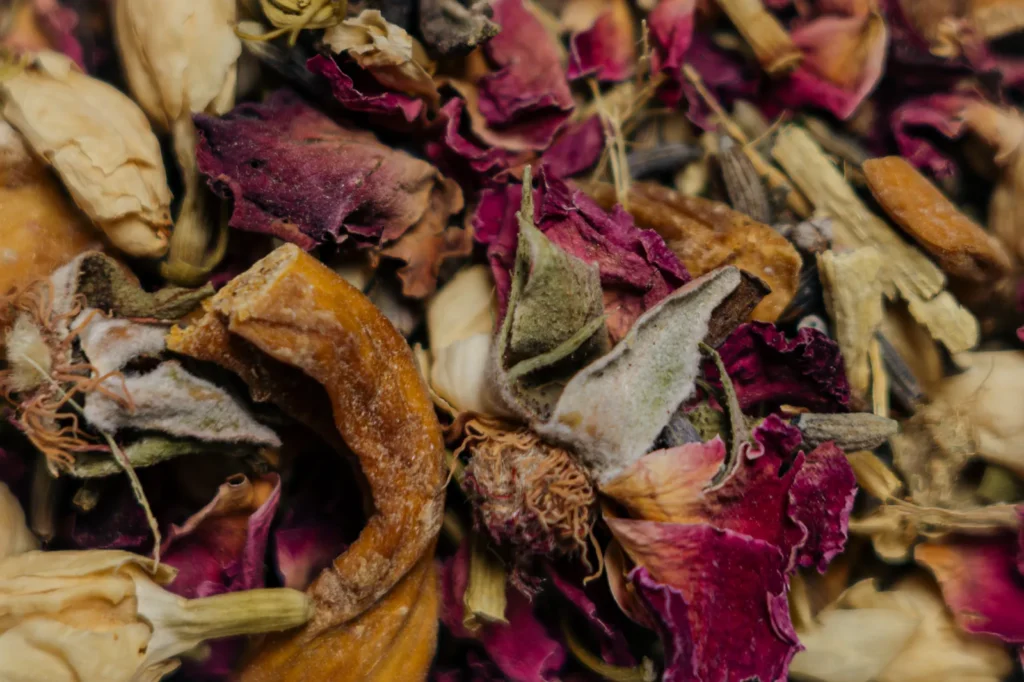
Before you start mixing, it helps to know how each herb tastes. Here’s a simple map to help you pair:
- Bright & citrusy: lemongrass, lemon balm, orange peel
- Cool & minty: peppermint, spearmint
- Floral & soft: chamomile, lavender, rose petals, jasmine
- Warm & spicy: ginger, cinnamon, cloves, cardamom, star anise
- Earthy & green: nettle, rooibos, honeybush
- Tart & fruity: hibiscus, rose hips, elderberries
- Naturally sweet: licorice root, honeybush, dried fruit pieces
Pairings that almost always work:
- Minty + citrusy (fresh and clean)
- Floral + minty (calm and bright)
- Earthy + spicy (cozy and grounding)
- Tart + citrusy (vibrant, and lovely iced)
A good rule of thumb: pick one or two flavor families per blend. Once you go beyond three, flavors start competing instead of harmonizing.
How to Blend Herbal Tea, Step by Step
- Set an intention. Ask what this cup is for: a slow morning, an afternoon reset, winding down at night? Let that guide your flavors.
- Choose your base. Pick one, or two at most.
- Add one or two support herbs that complement the base.
- Finish with a single accent. Start with less than you think. You can always add more.
- Measure in parts. Use the 3 : 2 : 1 ratio as a starting point and write it down.
- Mix gently in a large, dry bowl with your hands or a spoon. Try not to crush delicate flowers into dust.
- Brew a test cup. Use 1–2 teaspoons per 8 oz (240 ml) of hot water and steep for 5–7 minutes.
- Taste and take notes. Too sharp? Add more base. Flat? Add a little more accent. Too strong in one direction? Balance with its opposite flavor family.
- Make a small batch first. A few tablespoons is plenty until you love it.
Three Easy Blends to Try at Home
Use these as starting points, then make them your own.
Afternoon Citrus Reset
- 3 parts lemongrass
- 2 parts lemon balm
- 1 part peppermint
- A pinch of dried orange peel
Bright, clean and caffeine-free. A lovely cup for the 3 p.m. slump.
Soft Evening Florals
- 3 parts chamomile
- 1 part rose petals
- ½ part lavender (it’s strong, so go easy)
Gentle, honeyed and calming. Steep it covered so the floral aroma stays in your cup.
Cozy Spiced Rooibos
- 3 parts rooibos
- 1 part ginger root pieces
- ½ part cinnamon chips
- 2–3 cloves per batch
Warm and naturally sweet. Wonderful with a splash of steamed milk.
Tips From Our Blending Table
- Start with 3–4 herbs. Many of the best blends are simple. More herbs isn’t always more flavor.
- Respect the strong ones. Lavender, licorice root, cloves and hibiscus can take over a blend quickly. Use them in pinches.
- Match the cut size. Herbs of similar size mix evenly and won’t settle to the bottom of the jar. Shake your jar gently before each scoop.
- Mind the steep times. Roots, barks and seeds (ginger, cinnamon, rooibos) like longer steeps. Delicate flowers can turn bitter if steeped too long. In a blend, 5–7 minutes is a happy middle.
- Store it well. Keep blends in an airtight jar, away from light, heat and moisture. Label it with the herbs, ratio and date, so you can recreate a blend you love.
- Use quality herbs. Choose organic, food-grade herbs from a trusted source, and only forage if you’re absolutely sure what a plant is.
Want to Taste How It’s Done?
If you’d love to experience balanced blends before mixing your own, our Mindfoodness Gift Bundle brings together all four of our signature blends. Each one is built on this same base, support and accent idea:
- Pure Digest: chamomile and peppermint as the base, with fennel, marshmallow root and ginger for support.
- Serenity: a floral blend of lavender, jasmine and rose petals, with peppermint and a touch of licorice root.
- Mindful: bright lemongrass with nettle, elderberries, rose hips and tart hibiscus.
- Restorative: an earthy blend of calendula, nettle, elderberry, goldenrod, reishi and honeybush.
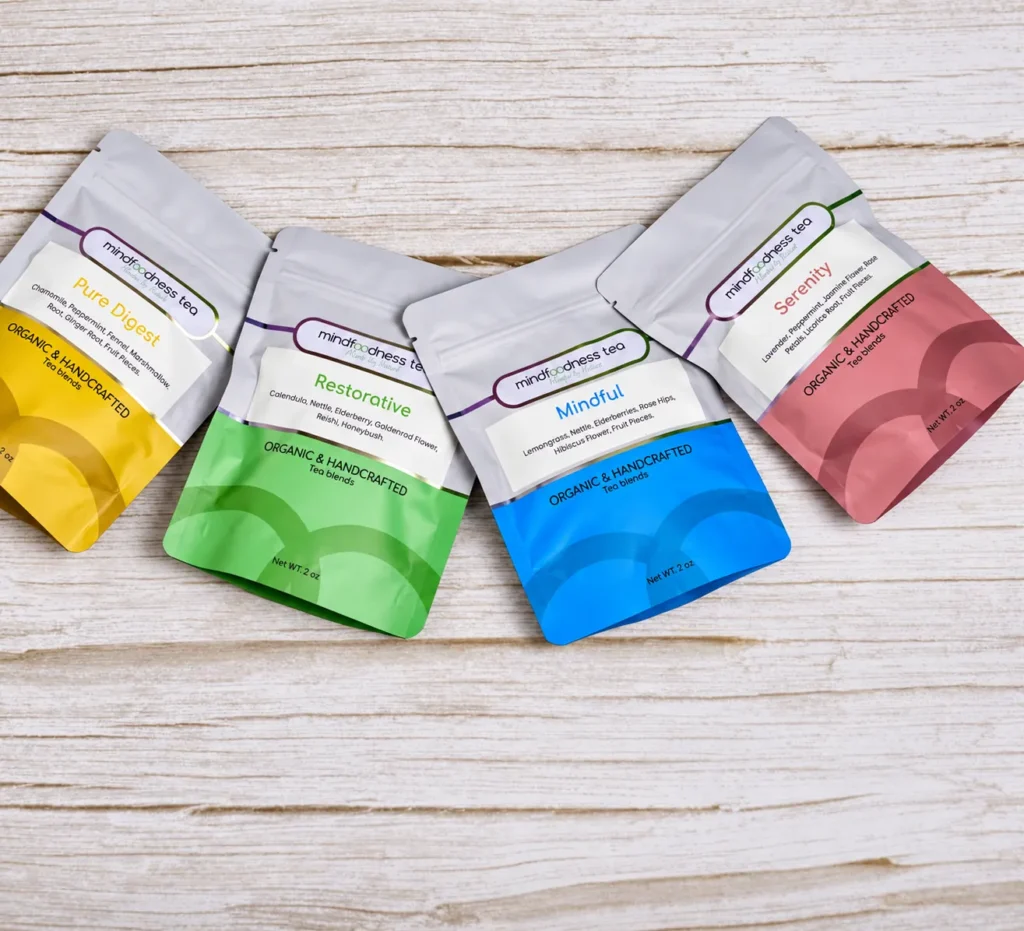
Sip them side by side and notice how each herb plays its part. It’s the best tasting lesson we know. You can explore every blend in our shop.
Like all our blends, they’re organic, caffeine-free and handcrafted in small batches.
A Few Gentle Cautions
Most culinary herbs are gentle, but a few deserve a note:
- Licorice root: not recommended in large amounts for people with high blood pressure or during pregnancy.
- Hibiscus: check with your healthcare provider if you take blood pressure medication or are pregnant.
- Chamomile: skip it if you’re allergic to ragweed or related plants.
- Reishi: check with your provider if you take blood thinners or have surgery coming up.
- Elderberries: use only dried, properly prepared berries. Never use raw berries.
- Pregnant, nursing or taking medication? Talk to your healthcare provider before trying new herbs.
The NCCIH Herbs at a Glance series is a helpful place to learn more about individual herbs.
Frequently Asked Questions
What is the best ratio for blending herbal tea?
A simple starting point is 3 parts base, 2 parts support and 1 part accent. Adjust from there, adding more base to soften a blend or a little more accent to make it more aromatic.
How many herbs should I put in a tea blend?
Three to five herbs is a great range for beginners. It’s enough for depth without the flavors competing.
How long does a homemade herbal tea blend last?
Stored in an airtight container away from light, heat and moisture, most dried herbal blends keep their best flavor for about 6 to 12 months. If the aroma fades, it’s time for a fresh batch.
Can I blend herbal tea with black or green tea?
Yes. Just remember that black, green and white teas contain caffeine, while herbal blends like ours are naturally caffeine-free. If you want a caffeine-free cup, stick to herbs only.
Blending tea is less about getting it “right” and more about paying attention: to aroma, color, taste, and how a cup makes you feel. So clear a little space on the counter, pull out a bowl, and let your hands lead the way. Your perfect cup might be one pinch away. When your blend is ready, enjoy it with our slow morning tea ritual or a quiet tea meditation.
This article is for general wellness information and isn’t medical advice.